
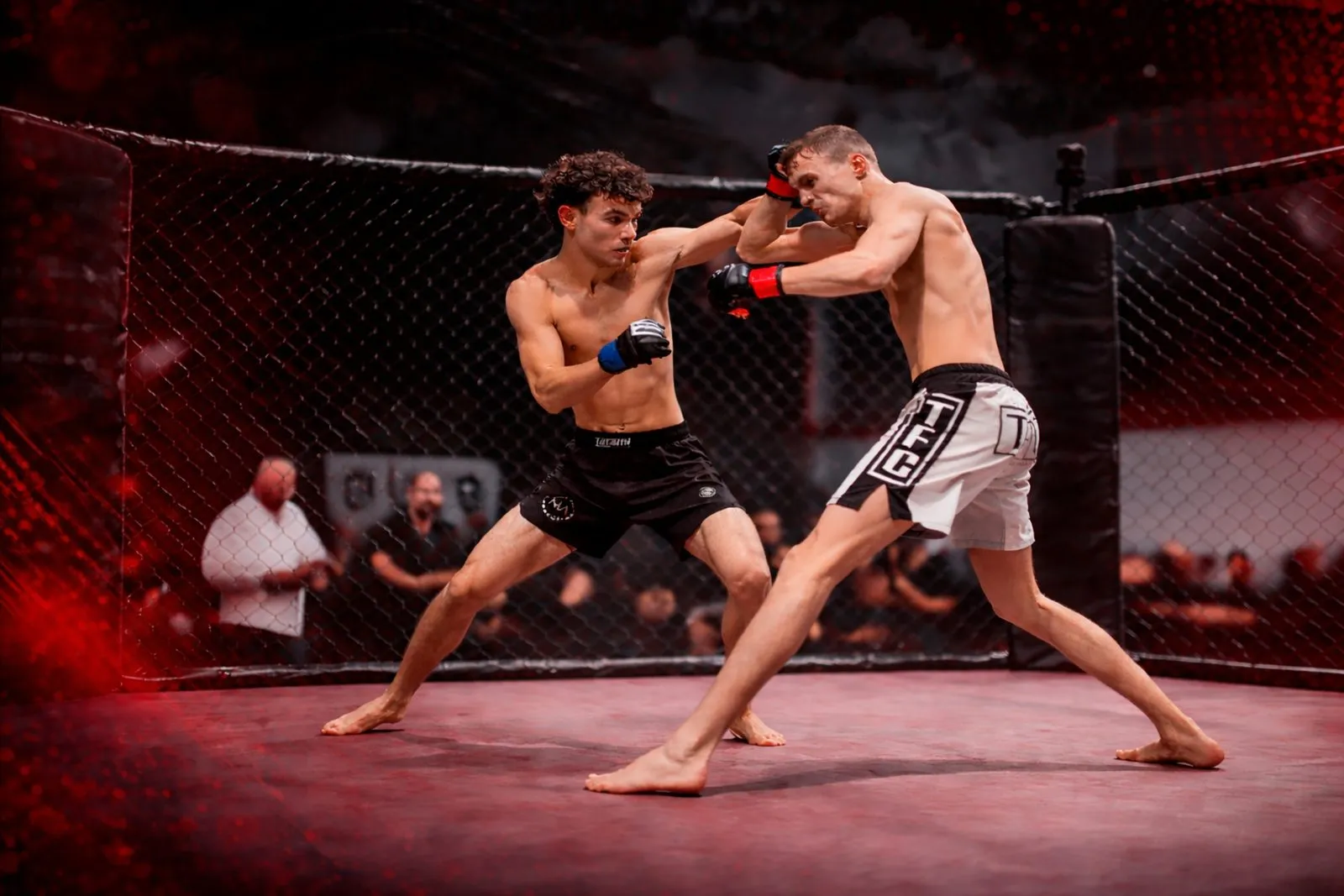
Every piece of the game
MMA
We believe the way forward in MMA is elite striking and elite grappling — Muay Thai for the stand-up, Brazilian Jiu-Jitsu for the ground, each taught properly by a coach who does nothing else. They stay in their own classes until you have a fight locked in. Then we blend them.
What we believe
The way forward in MMA is elite striking and elite grappling. Not a bit of everything — two disciplines, both done properly.
MMA is not one martial art. It’s striking, wrestling and grappling, each with its own decades of technique behind it, and the fighters who do well are the ones whose individual pieces are genuinely good. You get better striking from a Muay Thai coach who does nothing but striking, and better ground work from a jiu-jitsu coach who does nothing but that.
That’s why there is no weekly class called “MMA” on our timetable, putting a little of each into an hour. The disciplines stay in their own classes, where there is time to teach them properly.
Until a fight is locked in
Then it changes.
Once you have a fight booked, the two come together. The camp is built around that fight and that opponent, and the work moves to where the disciplines meet: the takedown off a strike, getting back to your feet, what your guard is worth when punches are part of it, how a clinch ends.
That is the point at which “MMA training” is the honest description of what you’re doing. Before it, you are building the pieces that camp will draw on — and building them better than you would by splitting an hour four ways every week.
What that looks like in practice
You train Muay Thai for your stand-up — punches, elbows, knees, kicks and the clinch. You train Brazilian Jiu-Jitsu, No-Gi especially, for control on the ground and for submissions. Wrestling and takedowns sit between the two: getting the fight where you want it, and keeping it off the floor when you don’t.
You won’t find a wrestling class on our timetable, because it isn’t one. Takedowns are taught inside the other two — the entries, the level changes and the clinch work in Muay Thai, the scrambles, the getting back up and the finishes in jiu-jitsu. Turn up to either and you are already training it.
Nothing about that is unusual. It’s how most fighters are actually built, whatever the sign on the door says.
Members who compete
We have members who fight MMA, and coaches who have cornered them. If competing is where you’re headed, say so early — it doesn’t change how you start, but the coaches will know what they’re building toward and can point you at the right sessions as you progress.
If it isn’t, that’s just as fine. Most people training these disciplines never intend to compete, and none of it is wasted.
Classes & levels
Find the right class
Striking
Muay Thai · Stand-up
Punches, elbows, knees, kicks and the clinch, taught by coaches who have competed. The clinch matters more in MMA than most people expect.
Wrestling and takedowns
Inside both classes · Not a separate session
Closing distance, getting the fight to the floor, and staying on your feet when someone wants to put you on your back. There is no wrestling class on the timetable — the entries and the clinch work live in Muay Thai, the scrambles and the finishes in jiu-jitsu.
Ground control
Brazilian Jiu-Jitsu · No-Gi in particular
Position before submission: holding top, escaping bottom, and understanding what changes once strikes are part of it.
Submissions
Finishing · Gi and No-Gi
Chokes and joint locks drilled against live resistance, which is the only way they hold up under pressure.
Good to know
Questions, answered
Do you run an MMA class?
Not as a weekly class on the timetable, no, and that is deliberate. Striking and grappling each stay in their own classes, where a specialist coach can teach them properly — Muay Thai for the stand-up, Brazilian Jiu-Jitsu for the ground, with wrestling and takedowns bridging the two. The blending happens when you have a fight locked in: that is when the camp is built around putting them together for that opponent.
Can I compete in MMA out of here?
Yes. We have members who compete in MMA, and coaches who have been in the corner for it. Start training, talk to a coach about where you want to go, and they'll help you build toward it.
Where do I start if MMA is the goal?
Pick whichever side you're weakest at and start there. If you've never grappled, start with Brazilian Jiu-Jitsu. If you've never been hit, start with Muay Thai. Either way, take the free trial and tell the coach MMA is what you're after — it changes nothing about how you start, but they'll know what you're working toward.
Do I have to fight?
No. Most people training these disciplines have no intention of ever competing, and the training works just as well for fitness, confidence and self-defence.
No experience needed
Ready to start?
No experience needed, at either gym. Four weeks to find your feet: the first two completely free, then two more at the intro rate, and your membership carries on from there unless you tell us otherwise. Pick your gym below and you can start online in a couple of minutes.